https://en.wikipedia.org/wiki/Chinese_calendar
The true arrival of autumn is marked by 白露 (Báilù). As temperatures cool, moisture in the air turns into dew on grass and trees during night.
During Bailu (White Dew), the 15th of the 24 traditional Chinese solar terms, ancient Chinese scholars divided the roughly 15-day period into three pentads (候, hòu). Each pentad lasts five days and traces subtle, sequential changes in bird behaviour as autumn deepens.
The three pentads of Bai lu are:
1. First Pentad: “The wild geese come” (鸿雁来) referring to the southward migration of wild swans & geese flying in distinct formations to warmer climates for the winter.
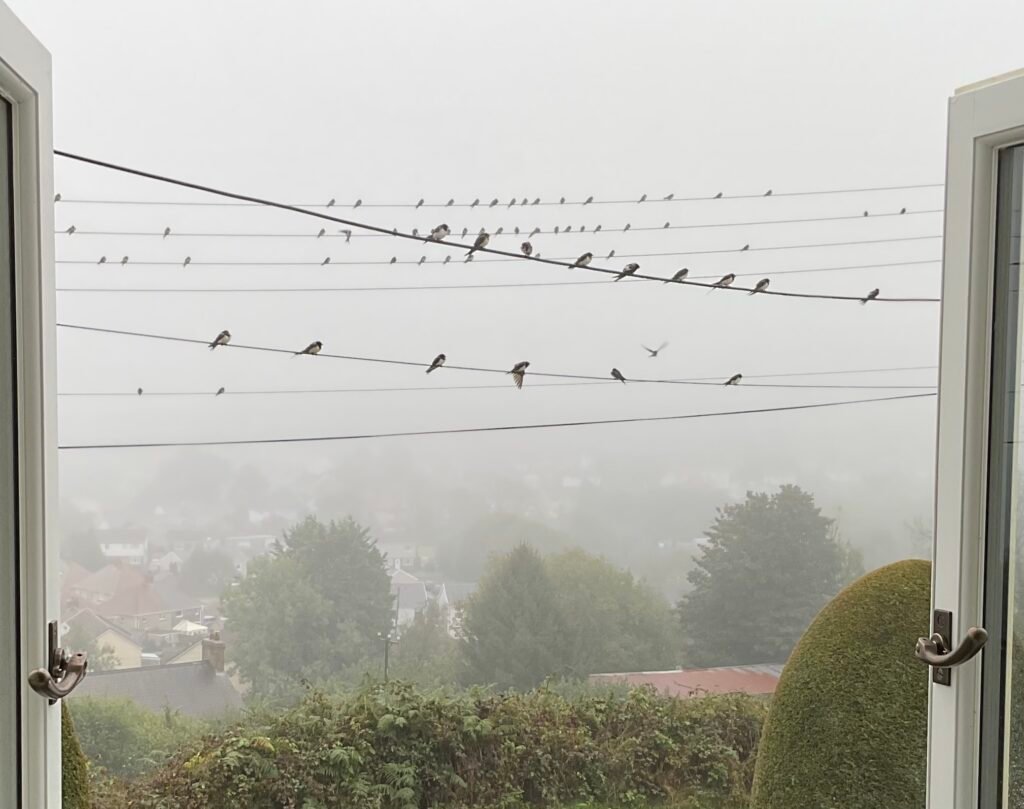
2. Second Pentad: “The dark birds return” (玄鸟归)refering specifically to swallows. Having reared their young over the spring and summer, the swallows leave their northern nests and return southward.
3. Third Pentad: “Birds stock their hoards” (群鸟养羞) The resident and non-migratory birds that stay behind begin to feel the true chill of autumn. They start actively collecting, storing, and hiding food (like seeds and grains) to sustain themselves through the upcoming winter.