Rhythms of Life

Dancing Nature's Rhythms

Walk Slowly

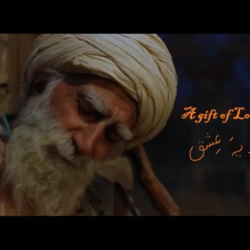
Walk Slowly It only takes a reminder to breathe,a moment to be still, and just like that,something in me settles, softens, makesspace for imperfection. The harsh voiceof judgment drops to a whisper and Iremember again that life isn’t a relayrace; that we will all cross the finishline; that waking up to life is what wewere Read more about Walk Slowly[…]
Eleusinian Mysteries Demeter & Persephone

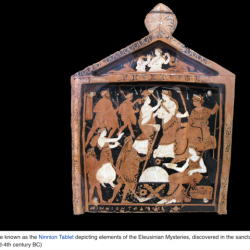
Eleusinian Mysteries The Eleusinian Mysteries (Greek: Ἐλευσίνια Μυστήρια) were initiations held every year for the cult of Demeter and Persephone based at Eleusis in ancient Greece. They are the “most famous of the secret religious rites of ancient Greece”.[1]Their basis was an old agrarian cult,[2] and there is some evidence that they were derived from the religious practices of the Mycenean period.[3][4] The mysteries represented the myth of the abduction of Persephone from her mother Demeter by the Read more about Eleusinian Mysteries Demeter & Persephone[…]

Pan

In ancient Greek religion and mythology, Pan (/ˈpæn/;[1] Ancient Greek: Πάν, romanized: Pán) is the god of the wild, shepherds and flocks, nature of mountain wilds, rustic music and impromptus, and companion of the nymphs.[2] He has the hindquarters, legs, and horns of a goat, in the same manner as a faun or satyr. With his homeland in rustic Arcadia, he is also recognized as the god of fields, groves, wooded glens and Read more about Pan[…]

Sothis and Isis

Sopdet is the ancient Egyptian name of the star Sirius and its personification as an Egyptian goddess. Known to the Greeks as Sothis, she was conflated with Isis as a goddess and Anubis as a god. A Hellenic bust of Sopdet, syncretized with Isis and Demeter Her name usually appears as Sopdet (Ancient Egyptian: Spdt,[3] lit. “Triangle” or “Sharp One”) after the known Greek and Latin form Sothis (Greek: Σῶθις, Sō̂this) History The engravings on the ivory tablet formerly Read more about Sothis and Isis[…]

Wheel of the year

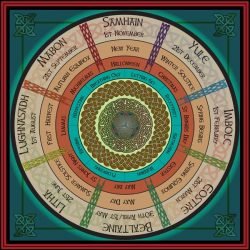
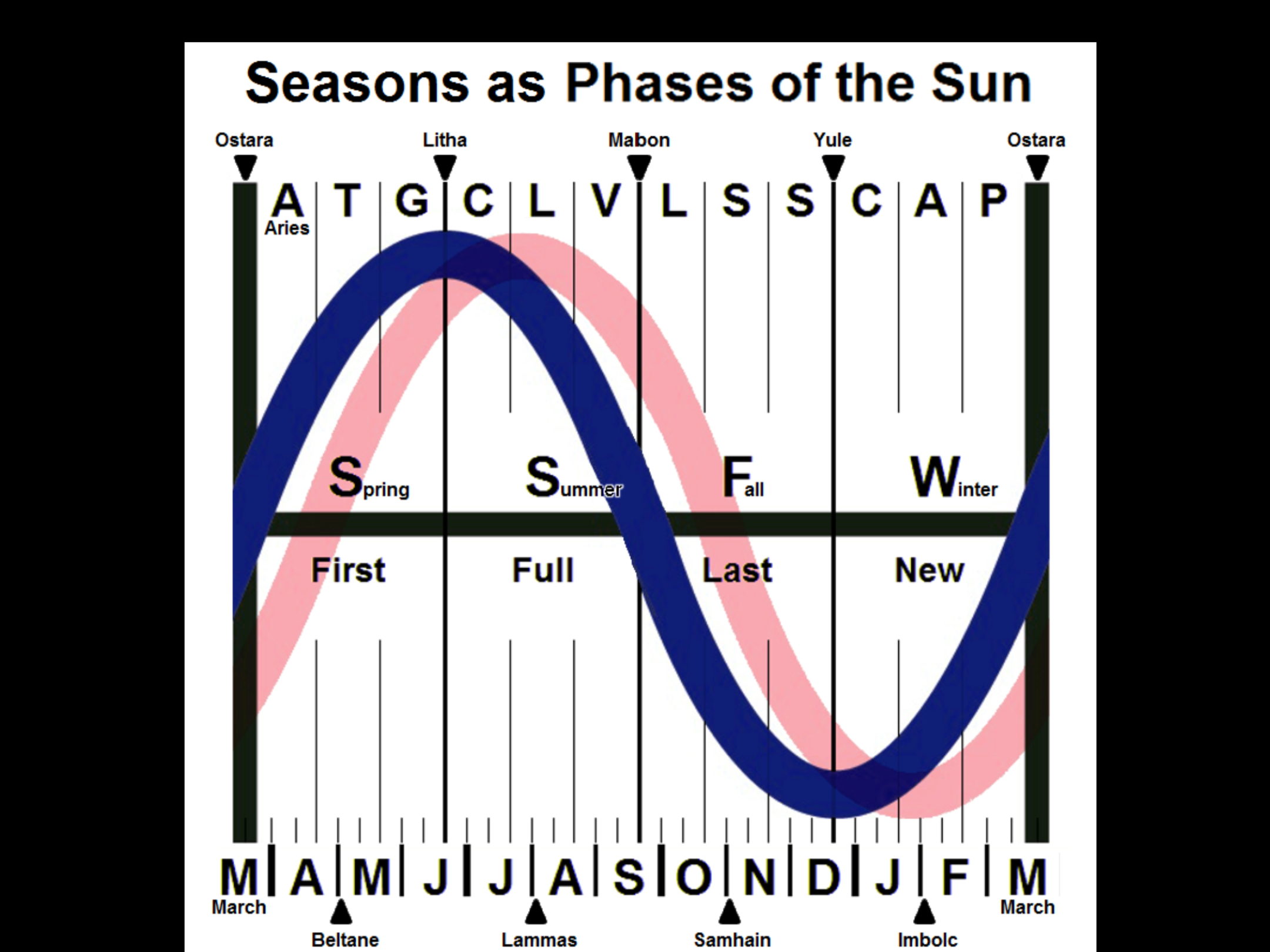
Wheel of the Year From Wikipedia, the free encyclopedia The Wheel of time or wheel of history (also known as Kalachakra) is a concept found in several religious traditions and philosophies, notably religions of Indian origin such as Hinduism, Sikhism, and Buddhism, which regard time as cyclical and consisting of repeating ages. Many other cultures contain belief in a similar concept: notably, the Q’ero Indians Read more about Wheel of the year[…]

Om Mani Padme Hum

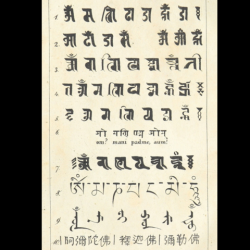
The Song of Great Compassion This song to Chenrezig, the Tibetan Buddha of Infinite Compassion (Avalokiteshvara, in Sanrskit) is a hymn to the jewel in the lotus. In this context, the jewel is compassion and the lotus is the heart.   From Wikipedia Auṃ maṇi padme hūṃ[1] (Sanskrit: ॐ मणिपद्मे हूँ, IPA: [õːː mɐɳɪpɐdmeː ɦũː]) is the six-syllabled Sanskrit mantra Read more about Om Mani Padme Hum[…]

Indigenous Wisdom

The Hopi have a word for the state of the world we live in, and they call it Koyannisqatsi—meaning life out of balance. From the Indigenous perspective, the underlying source of our collective post-modern malaise is quite simply a disconnection from the Earth itself. And it is only through a reconnection with the Earth and our Read more about Indigenous Wisdom[…]